
JUL 31, 2026 · DWI
Missouri Labor Day DWI Crackdown 2026: Where Checkpoints Go Up and What to Do If You're Stopped
Labor Day weekend is Missouri's most heavily enforced DWI period of the year, with saturation patrols and sobriety checkpoints statewide. Here's how the enforcement wave works, what officers are trained to look for, and exactly what to say and do if you get stopped.
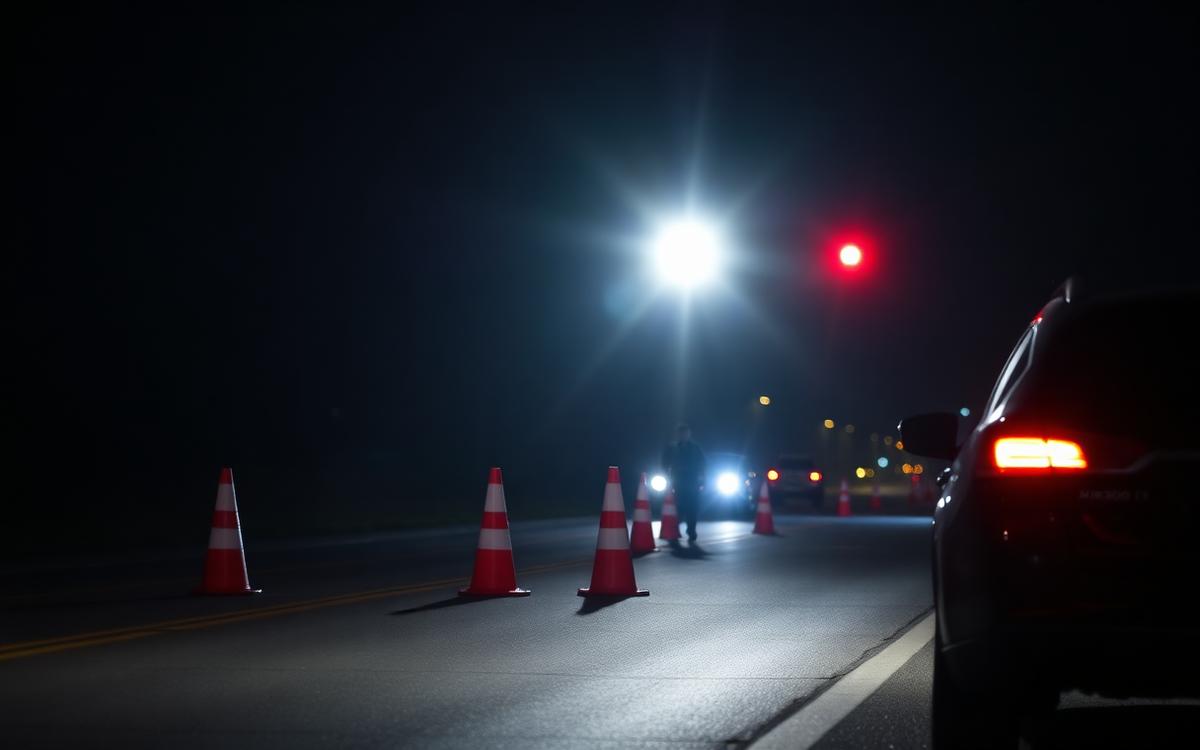
Every year between mid-August and the Tuesday after Labor Day, Missouri law enforcement runs its largest coordinated impaired-driving enforcement campaign of the calendar. The Missouri State Highway Patrol adds troopers to every troop, municipal departments run grant-funded overtime saturation patrols, and multi-agency task forces set up sobriety checkpoints on high-volume corridors.
If you drive anywhere in Missouri over that weekend, your odds of being stopped are meaningfully higher than on any ordinary weekend. Here is what that enforcement actually looks like and how to handle it.
How the Labor Day Enforcement Wave Works
Three things happen at once:
- **Saturation patrols.** Extra marked units concentrated near entertainment districts, lake corridors, and highway on-ramps between roughly 9 p.m. and 3 a.m.
- **Sobriety checkpoints.** Pre-announced, publicly noticed stops where every vehicle — or every nth vehicle under a written neutral formula — is briefly contacted.
- **Counting periods.** Agencies report arrest and citation totals for the holiday window, which creates real institutional pressure to make stops.
The practical consequence is that marginal stops get made. Officers pull cars for a plate light, a wide turn, or a slow roll through a stop sign, and the traffic violation becomes the doorway to a DWI investigation.
What Officers Are Trained to Look For
Once you are stopped, the officer is running a structured checklist: odor of alcohol, bloodshot or watery eyes, slurred or repetitive speech, fumbling for a license or insurance card, delayed responses, and admissions. Almost every DWI report in Missouri contains the same sentence stack. Anything you say about how much you had to drink goes directly into that report.
Your Rights at a Missouri Checkpoint
Checkpoints are constitutional in Missouri when the agency follows neutral criteria, publicizes the operation in advance, and minimizes the intrusion. Within that framework you still have rights:
- You must provide your license, registration, and proof of insurance.
- You are not required to answer questions about where you have been or what you have had to drink. "I'd rather not answer questions" is a complete answer.
- Field sobriety tests — the eye test, the walk-and-turn, the one-leg stand — are voluntary in Missouri. There is no license penalty for declining them. They are designed to be difficult, they are graded subjectively, and they are usually recorded.
- The portable roadside breath device is also generally voluntary and its numeric result is not admissible to prove intoxication in the way the station instrument is.
- The evidentiary breath, blood, or urine test at the station is different. Under Missouri's implied consent law, RSMo 577.041, refusing that test triggers a one-year administrative license revocation and the refusal can be used against you in court.
That last distinction — voluntary roadside tests versus the implied-consent evidentiary test — is the single most misunderstood point in Missouri DWI law, and it is where drivers most often hurt themselves.
What to Do in the First Ten Minutes
Pull over promptly and park safely. Keep your hands on the wheel and your interior light on. Be polite and unfailingly calm; demeanor shows up in the video and matters later. Provide your documents. Decline to discuss your evening. Decline the roadside tests politely and without argument. Do not lean on the car, do not volunteer explanations, and do not argue the law at the roadside — that fight belongs in court, where it can be won.
If You Are Arrested
Two separate cases start the moment you are arrested: a criminal DWI case and an administrative action against your driver's license through the Department of Revenue. The license case moves fast — you generally have only 15 days from the notice to request an administrative hearing, and missing that window forfeits the challenge no matter how strong your criminal defense turns out to be.
A first-offense Missouri DWI is a class B misdemeanor carrying up to six months in jail, fines, a 90-day license suspension, court costs, SAT/SATOP program costs, and insurance consequences that commonly total well over $10,000 across a few years. First offenses are also, frequently, defensible or resolvable in ways that keep the conviction off your record entirely.
Call Before the Fifteen Days Run
Rosenblum Robbins defends DWI cases throughout Missouri, including holiday checkpoint and saturation-patrol arrests. Consultations are free. If you were arrested over a holiday weekend, the clock on your license hearing is already running — call before it expires.
Need help with a similar case?
A free consultation takes 15 minutes and could save you thousands.
Start a free consultation