
JUN 2, 2026 · DWI / CANNABIS / CRIMINAL DEFENSE
Can You Get a DWI for Marijuana in Missouri? 2026 Guide to Cannabis DUI Laws, Penalties, and Defenses
Recreational cannabis is legal in Missouri — but driving after using it is not. Here's how Missouri marijuana DWI charges work in 2026, why the science is shaky, and the defenses that actually win these cases.
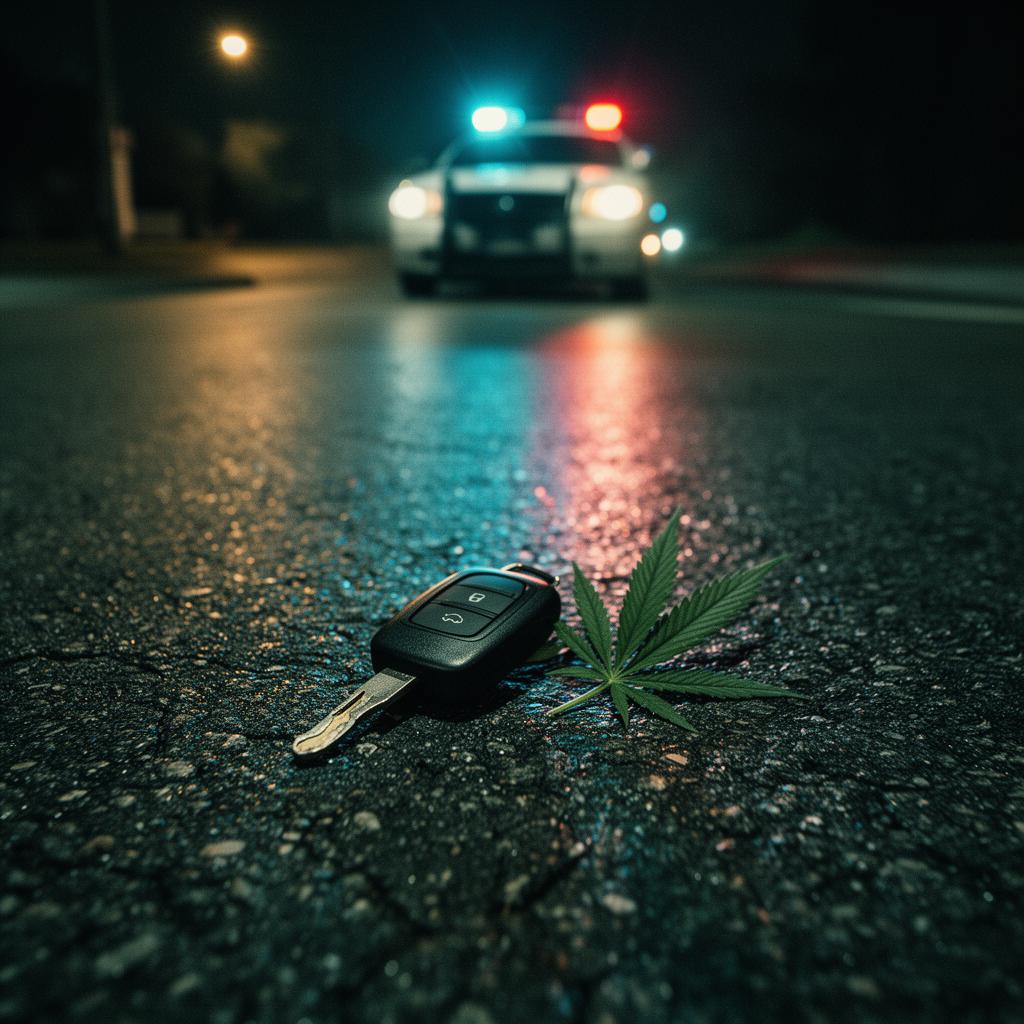
Recreational marijuana has been legal for adults in Missouri since December 2022 under Amendment 3, and dispensaries are now a fixture in every major city in the state. What hasn't changed is the law on driving. You can buy cannabis legally, consume it legally at home, and still be arrested, charged, and convicted of DWI for driving afterward — even if you feel completely sober.
Marijuana DWI cases in Missouri are exploding in 2026, and they are some of the messiest, most defensible criminal cases on a prosecutor's docket. Here's what you need to know if you've been charged, or if you want to avoid being charged in the first place.
Missouri's Marijuana DWI Law in 2026
Missouri's DWI statute (RSMo 577.010) makes it illegal to operate a vehicle while in an "intoxicated condition." That phrase covers alcohol, controlled substances, prescription drugs, and yes — cannabis, even though cannabis is legal to possess and use in Missouri.
Unlike alcohol, Missouri has no per se limit for THC. There is no "0.08 for weed." The prosecution has to prove that you were actually impaired by cannabis at the time of driving, not just that cannabis was in your system. That distinction is the foundation of every successful marijuana DWI defense.
Why the Science Doesn't Work Like Breathalyzers
Alcohol leaves the body in a predictable, linear way. THC does not. Active THC (delta-9-THC) peaks in the blood within minutes of inhalation and drops sharply over the next 1–3 hours, while inactive metabolites (carboxy-THC) can linger for days or weeks in a regular consumer — long after any impairment has worn off.
Translation: a positive THC blood or urine test from a Missouri lab does not establish that you were impaired when you were driving. It establishes that you used cannabis sometime recently. For a regular consumer or medical marijuana patient, "recently" can mean last week.
Prosecutors and judges across Missouri are still catching up with this science. Defense attorneys who understand it have an enormous advantage.
Drug Recognition Experts (DREs) — and Their Weaknesses
When officers suspect marijuana impairment, they often call in a Drug Recognition Expert — an officer with extra training in a 12-step evaluation that includes pupil measurements, balance tests, blood pressure, and muscle tone. DRE testimony sounds scientific in a courtroom, and untrained defense lawyers treat it as gospel.
It is not. The DRE protocol has been challenged repeatedly in peer-reviewed literature and in courtrooms across the country. The methodology was developed in the 1970s, the field accuracy studies are thin, and the protocol assumes the officer can pick the right "drug category" from a closed list — which is itself a guess. A defense attorney who has cross-examined DREs before knows exactly where to push.
What Officers Are Actually Looking For at a Traffic Stop
If you're pulled over and the officer suspects cannabis use, they're typically watching for:
- Odor of marijuana in the vehicle (post-legalization, this alone is increasingly insufficient to justify a search in Missouri).
- Bloodshot, glassy eyes — also caused by allergies, contacts, fatigue, and air conditioning.
- Slow or delayed responses to questions.
- Visible cannabis, paraphernalia, or dispensary packaging in plain view.
- Performance on field sobriety tests — which were validated for alcohol, not THC.
Every one of those observations has an innocent explanation. Building those alternative explanations is what a defense lawyer does.
Your Rights at a Marijuana DWI Stop
- You are not required to answer questions about whether or when you used cannabis. Politely decline. "Officer, I'd prefer not to answer questions" is a complete sentence.
- You are not required to perform roadside field sobriety tests. They are voluntary, they were not designed for cannabis, and they are almost always used to justify an arrest the officer has already decided to make.
- You are not required to consent to a search of your vehicle. Make the officer get a warrant or articulate probable cause on the record.
- After a lawful arrest, Missouri's implied consent law (RSMo 577.020) requires you to submit to a chemical test. Refusing the post-arrest test triggers a one-year license revocation, separate from the criminal case. Comply with the post-arrest test, but say nothing else.
Penalties for a Missouri Marijuana DWI
Marijuana DWI penalties track alcohol DWI penalties in Missouri:
- First offense: Class B misdemeanor — up to 6 months in jail, $1,000 fine, 90-day license suspension, SR-22 insurance for two years, and a permanent criminal record.
- Second offense (within 5 years): Class A misdemeanor — up to 1 year in jail, mandatory minimum 10 days, 1-year license revocation.
- Third offense: Class E felony — up to 4 years in prison, 10-year license denial.
Collateral consequences are the same as alcohol DWI: insurance hikes, CDL impact, employment background checks, immigration consequences for non-citizens, and professional license review for healthcare workers, teachers, attorneys, and security-clearance holders.
Medical Marijuana Patients: Special Considerations
Being a registered Missouri medical marijuana patient does not give you a defense to DWI. The state's medical cannabis program expressly does not authorize driving while impaired. However, your patient status, dosing history, and the timeline of your last use can be powerful evidence that any THC in your system was from therapeutic use hours or days before the stop — not from recent recreational impairment.
Defenses That Actually Work
Successful Missouri marijuana DWI defenses typically attack one or more of:
- The legality of the stop. No reasonable suspicion = everything that follows gets suppressed.
- The probable cause for arrest. Bloodshot eyes and an odor are no longer enough in most Missouri jurisdictions.
- The reliability of the chemical test. Chain of custody, lab procedures, and the interpretation of THC levels are all attackable.
- The link between the test result and actual impairment at the time of driving. This is where the prosecution most often falls apart.
- DRE methodology and qualifications.
Talk to Rosenblum Robbins Before You Talk to Anyone Else
Marijuana DWI is one of the fastest-evolving areas of Missouri criminal law. We defend these cases regularly, we understand both the cannabis side (we handle Missouri cannabis law as a core practice) and the DWI side (also core practice), and we know which prosecutors and judges are taking which positions in 2026.
If you've been charged with a marijuana DWI in Missouri, do not plead guilty, do not give a statement, and do not assume the case is hopeless because there was THC in your blood. Call us. The consultation is free, the 15-day license-hearing clock is already running, and the defenses on these cases are real.
Need help with a similar case?
A free consultation takes 15 minutes and could save you thousands.
Start a free consultation